


Can a Barber Build an Ethical AI Image Generator?
Updated: Jul 7
My friend Ace and I sat down over coffee to discuss a perfectly reasonable question:
Can an ordinary creative train an AI image model using only images they have the right to use?

By “ordinary creative,” I meant me.
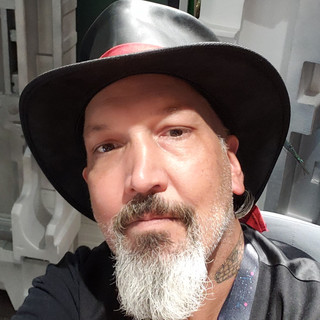
I am a barber. I know how to cut hair, run a small business, write fantasy stories, help make low-budget movies, and act mad as a hatter at, well, the drop of a hat.
I am not a computer scientist.
When this project began, the technical terms sounded less like image-generation tools and more like things a malfunctioning robot might shout before exploding.
Still, I had a practical goal. I had written the first in a series of fantasy novels about a young bard named Ayam Handsoom and the strange group of performers who travel with him. I wanted illustrations of recurring characters, stages, villages, props, and complete scenes. I also wanted those illustrations to share a consistent black-and-white fantasy storybook style.
Why Didn’t I Just Hire an Artist?
Before anyone asks why I did not simply pay an artist to create the illustrations, I tried.
I asked friends, my cousin, and friends of friends. Some were not interested in taking on a commission. Others worked exclusively in styles that did not match the pen-and-ink fantasy illustrations I could see in my head.
I looked on Fiverr, and there were some affordable artists there, but I got the feeling that the ones in my budget were just going to use AI themselves.
I could have kept looking. I’m sure there’s someone out there who works in this style. But after a while I realized that hiring a professional artist to create every character, location, prop, and scene would have cost more than I could afford. That does not mean the artists were charging too much. Good artwork takes skill, time, and labor.
But I am an independent author. I do not have a publisher financing a complete set of illustrations, and I could not spend thousands of dollars illustrating a book that might never earn that money back.
In the meantime, I had been experimenting with AI image generators.
After a great deal of prompting, I produced several images that were exactly what I had imagined. For the first time, I could see my characters and their world taking shape in the style I wanted.
The problem was no longer whether AI could create the images. The problem was whether I could use those images in my book and feel right about it.
The Part That Made Me Uncomfortable

I already knew there were serious questions about AI image models. Artists and photographers were accusing companies of using their Intellectual property without permission. My book was my own intellectual property and I didn’t want it to benefit from taking advantage of someone else’s. Making AI images for my own amusement felt like one thing. Putting those images into a book I hoped to sell felt different.
Honestly, it made me feel dirty. I wanted to know whether there was another way so I asked “Could I train an image model using only rights-cleared images.
That was when Ace told me about LoRAs.
What Is a LoRA?
LoRA stands for Low-Rank Adaptation. In ordinary language, it is a relatively small add-on that can teach an existing image model a more specific style or concept. The base model already knows what people, horses, buildings, trees, clothing, musical instruments, and other objects generally look like. The LoRA influences how the model draws them.
A rough comparison would be hiring an experienced artist who already understands anatomy, perspective, architecture, and composition, then handing that artist a carefully organized portfolio and saying: “For this project, draw everything like this.”
That comparison is not technically perfect, but it got me through the first cup of coffee.
In my case, I wanted the LoRA to learn a black-and-white fantasy illustration style with clear lines, hatching, readable figures, and complete scenes.
I figured that if I trained my own LoRA using only CC0 and public-domain images, it would clear my conscience when it came to using other people’s intellectual property.
So I asked Ace how to do it.

The Plan
I was not going to build one of the giant image models from scratch.
Training a full foundation model would require an enormous collection of images, serious computing power, a research team, and the kind of electrical bill that makes the utility company call to check on you.
A LoRA was much more realistic.
The LoRA would sit on top of Stable Diffusion XL, usually shortened to SDXL. SDXL would provide the general knowledge of objects and scenes. My LoRA would teach it the particular pen-and-ink style I wanted.
The tools were available, SDXL could run locally on my laptop, and although the project seemed difficult, it didn’t seem completely impossible.
I would collect a group of rights-cleared pen-and-ink illustrations and document where they came from. I believed that if every image I used to train my LoRA was cleared for me to use, then the image generator I created with it would be ethically in the clear.
Simple.
Why CC0 and Public-Domain Images?
I wanted to be able to answer clearly when someone asked where my training images came from.
For this experiment, I decided to begin with images identified as CC0 or public domain.
CC0 is a Creative Commons tool that allows a creator or rights holder to waive as many copyright restrictions as legally possible.
Public-domain works are generally no longer protected by copyright, although the exact reason can depend on the age of the work, where it was created, when it was published, and the law that applies.
I am conducting this experiment in the United States and evaluating public-domain status primarily under United States law. Other countries may reach different conclusions.
Even then, “old” does not automatically mean “safe to download and use.” A nineteenth-century drawing posted on Pinterest does not arrive with a reliable paper trail. A blog may describe an image as “copyright free” without explaining who made that determination.
Even when the original artwork is clearly old, I still want to know where the digital file came from and what the museum, library, or archive holding it says about reuse.
So the goal is not simply to collect attractive drawings. The goal is to build a dataset whose contents I can explain.

The Paperwork Is Part of the Experiment
Earlier I said, it was simple. That's how I felt before Ace started talking about documenting the images so I would have a record of right-cleared images.
For every image I accepted into the dataset, Ace told me to record the artist, title, date, holding institution, source page, stated rights status, access date, original file, and a copy or screenshot of the rights notice.
My enthusiasm dipped slightly when I saw how much paperwork that created. I wanted to train an image model, not apply for a federal grant.
Ace suggested giving every accepted image an identification number connecting the original file, source page, rights evidence, processing notes, and eventual training caption.
That would keep the dataset from turning into a folder full of mysterious downloads named things like:
final_final_2_reallyfinal.jpg
Each image would have a record. I would be able to trace where it came from, why I believed I could use it, what changes I made to the training copy, and what caption was eventually attached to it.
That sounded tedious. It was also the whole point. If I could not explain where an image came from and why I believed I had the right to use it, then I had not really solved the problem I set out to solve.
One More Piece of Full Disclosure
Ace is not a human friend who happens to be unusually knowledgeable about AI. Ace is the name my ChatGPT assistant chose for itself. Our conversations are the working notebook for this project.
Ace helps explain the technical concepts, organize the process, troubleshoot software, and prepare the first drafts of these posts. I correct the technical explanations, add the human details, and cut the word count because Ace loves to overexplain. Michele, my editor and loving partner, reviews the writing before it is published.

I am not hiding the AI assistance because the AI assistance is part of the story.
This experiment is about training an image LoRA, but it is also about what happens when a barber with almost no computer science background works with an AI teacher and tries to build a more ethical creative tool. The mistakes, corrections, and confusing menus are part of the story.
I did not ask AI to make the project for me. I asked AI to teach me how to make it myself.
Sources consulted
U.S. Copyright Office, Copyright and Artificial IntelligenceThe Verge, Artists’ lawsuit against Stability AI and Midjourney gets more punchHugging Face, LoRAHu et al., LoRA: Low-Rank Adaptation of Large Language ModelsHugging Face, Stable Diffusion XL Base 1.0 model cardCreative Commons, CC0 1.0 UniversalCreative Commons, Public Domain Mark 1.0 UniversalU.S. Copyright Office, What is Copyright?U.S. Copyright Office, Duration of CopyrightRightsStatements.orgGebru et al., Datasheets for Datasets


Comments